Wooden
rafters
Where is it appropriate to use wooden trusses:
The frames made of solid wood and glued timber are processed technology with care and precision. The investor, architect, or designer always saves with their choice – material during production, time during assembly, and finances during payment.
shape and structural variability
the space can be used as a residential attic or storage area
quick assembly
long lifespan
possibility of larger roof slopes (up to 45⁰)
high degree of prefabrication
precise processing
static reliability
material savings
possibility of combining wood and steel
aesthetic value including the realization of artistic elements
ecological product
Options for using wooden trusses:
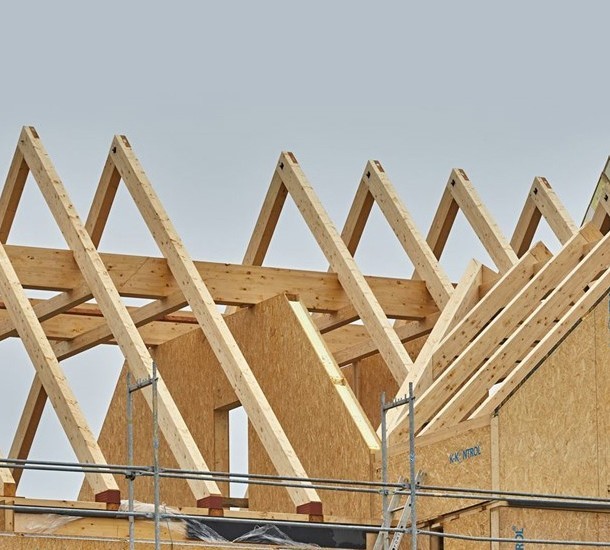
roofs of family houses (visible and non-visible roof structures)
roofs of atypical shapes, including decorative and artistic elements
roofs of residential houses and civic amenities
heavy all-timber frames
atypical wooden constructions
garage spaces
landscape architecture (pergolas, gazebos, shelters, swings, terraces)
What is the difference between solid wood trusses and glued wood trusses
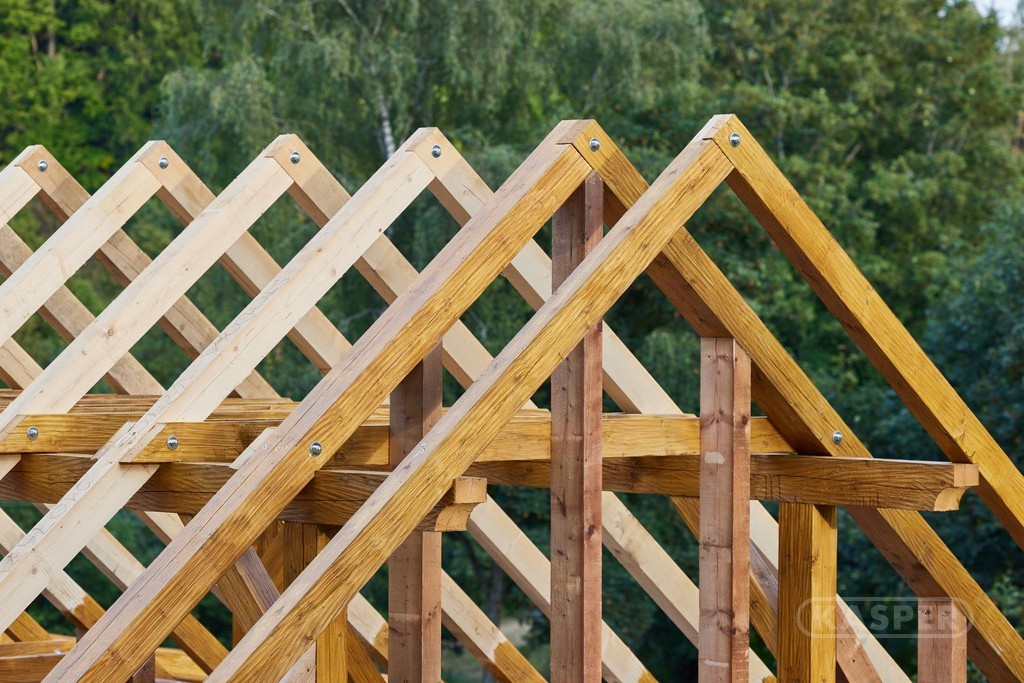
Solid wood trusses, in terms of the so-called "katr", are mostly intended for unexposed structures. If the solid wood is planed, it meets high aesthetic demands and is used for exposed truss structures.
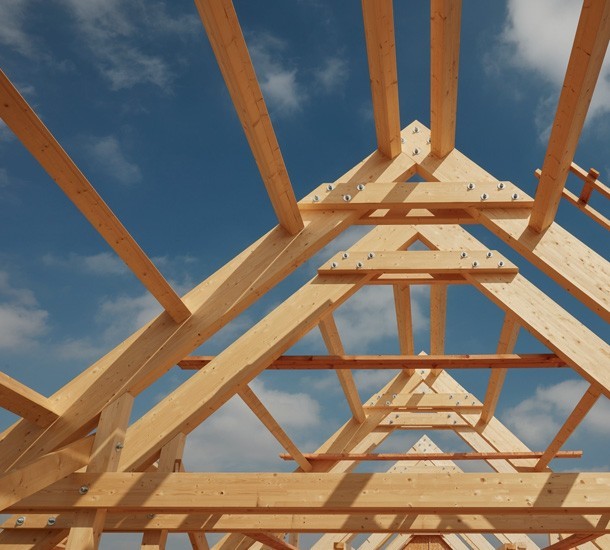
Glued wood trusses can be safely used in any roof structure. Unlike solid wood, they work less, twist, and crack less. Glued laminated materials such as BSH (multilayered glued laminated timber) or KVH (solid structural wood), DUO, or TRIO (glued profiles) have no defects in the wood, are stable, and highly load-bearing.
How we manufacture both solid wood and glued wood trusses
The specialists at KASPER CZ have been engaged in the production of wooden load-bearing structures and glued materials for more than 20 years. The motto of our work is a simple message:
A truss from us fits to the millimeter and lasts a hundred years.
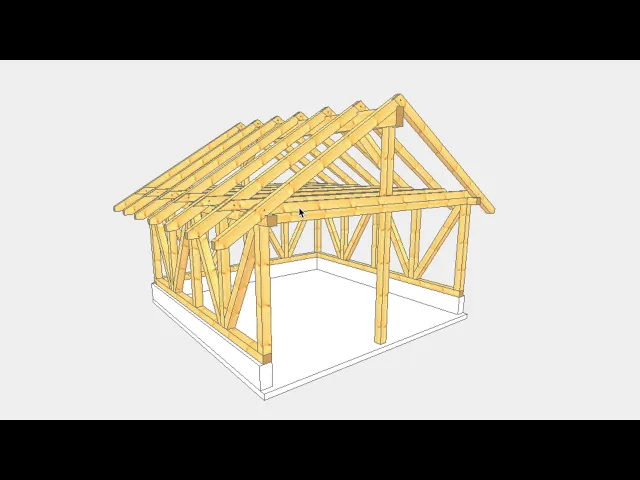
The realization of a wooden truss or atypical structures is always preceded by a detailed 3D design of the structure, which we consult in detail with the customer. The design in the static software by DLUBAL and the structural shape design in the SEMA program ensure one hundred percent static reliability, precision, and material savings.
For the production of traditionally tied wooden structures, we most often use spruce wood. However, larch, pine, or wood from selected deciduous trees is not excluded. The "katr" solid for unexposed structures is treated with Lignof Stabil Extra impregnation, and the elements made of glued wood are treated with an appropriate coating. The top preventive protection stands out for its resistance to leaching, is suitable for application on materials intended for unstable weather conditions and rain. It protects against wood-damaging insects, fungi, and molds, as well as wood-staining molds.
Technologies used in the production of wooden trusses:
CNC wood processing center Hundegger K2i 1250 (1 pc)
single-blade computer-controlled angular and shortening saw (2 pcs)
four-blade angular and shortening saw (1 pc)
impregnation soaking tank (1 pc)
design software R-STAB, RX-TIMBER by DLUBAL
structural software SEMA
Benefits of wooden trusses from Kasper CZ
We approach traditional carpentry with respect for honest craftsmanship and knowledge of the latest technologies. Traditionally tied structures branded KASPER CZ fulfill their function for several generations.
As a Czech manufacturer of wooden load-bearing structures, we have been active in the market since 1994. We supply not only to the Czech Republic but also to Poland, Austria, and Slovakia. We have built a stable team of experts and pay significant attention to employee training. We place great emphasis on improving company processes.
The result of all our efforts is thousands of satisfied private investors, and we also collaborate with architects, developers, municipalities, construction companies, and craftsmen providing carpentry work.